
Table of Contents
How to Change Your Garage Door Opener Battery (Without Losing Your Mind)
Let’s be real—garage doors are like that one friend who’s mostly reliable but throws a tantrum when you least expect it. One day, everything’s fine. The next, your opener’s blinking like a confused traffic light, and your garage door sounds like it’s auditioning for a heavy metal band. Spoiler: The culprit is usually the battery. Lucky for you, swapping it out is easier than assembling IKEA furniture (and way less rage-inducing). Let’s walk through this together—no lab coat or engineering degree required.
Oh, and if you’re in Long Beach and this whole process feels like herding cats, just call Long Beach Garage Doors. We’ve been fixing garage door gremlins here for years—whether it’s a simple battery swap or a full automatic garage door installation. But first, let’s tackle the basics.
Step 1: The “What Even Is a Garage Door Opener Battery?” Phase
Most modern openers use a backup battery to keep things running during power outages or when your main power supply decides to ghost you. These batteries are typically tucked inside the opener unit, hiding like a ninja. The most common types?
- 9-volt batteries (the rectangular ones your smoke detector hoards).
- 12-volt sealed lead-acid batteries (the chunky, rechargeable kind).
Pro Tip: Check your opener’s manual first. If you lost it (no judgment), Google your model number or call Long Beach Garage Doors—we’ve seen everything.
Step 2: Gather Your Tools (No, You Don’t Need a PhD)
Here’s what you’ll need:
- A ladder (preferably one that doesn’t wobble like a TikTok dance).
- A screwdriver (flathead or Phillips—check your opener’s housing).
- A new battery (duh).
- A rag (for dusting off that opener you’ve ignored since 2015).
FYI: If your garage door still acts up after a battery change, you might be dealing with a bigger issue—like a broken spring or misaligned garage door track. In that case, skip the heroics and call pros like us.
Step 3: Let’s Crack This Thing Open (Safely, Please)
- Unplug the opener. Because getting zapped is not on today’s to-do list.
- Climb the ladder (pretend you’re Indiana Jones retrieving ancient artifacts).
- Remove the cover. Most openers have screws or a sliding panel. Set them aside so they don’t pull a disappearing act.
- Locate the battery. It’s usually front-and-center, wearing a thick layer of dust.
Heads Up: If your opener’s wiring looks like spaghetti thrown at a wall, don’t panic. That’s normal. Just avoid yanking anything.
Step 4: Swap That Bad Boy Out
- Disconnect the old battery. Gently unclip the wires—no Hulk moves needed.
- Compare the old and new batteries. Ensure they’re the same voltage and type. Mixing them up could turn your opener into a paperweight.
- Connect the new battery. Red to red, black to black. If you’re colorblind, look for “+” and “-” symbols.
- Secure the wires. You don’t want them dangling like overcooked noodles.
Quick Rant: Ever wonder why garage door batteries die right before a storm? It’s like they want you to get drenched.
Step 5: Test It Like You Mean It
- Plug the opener back in.
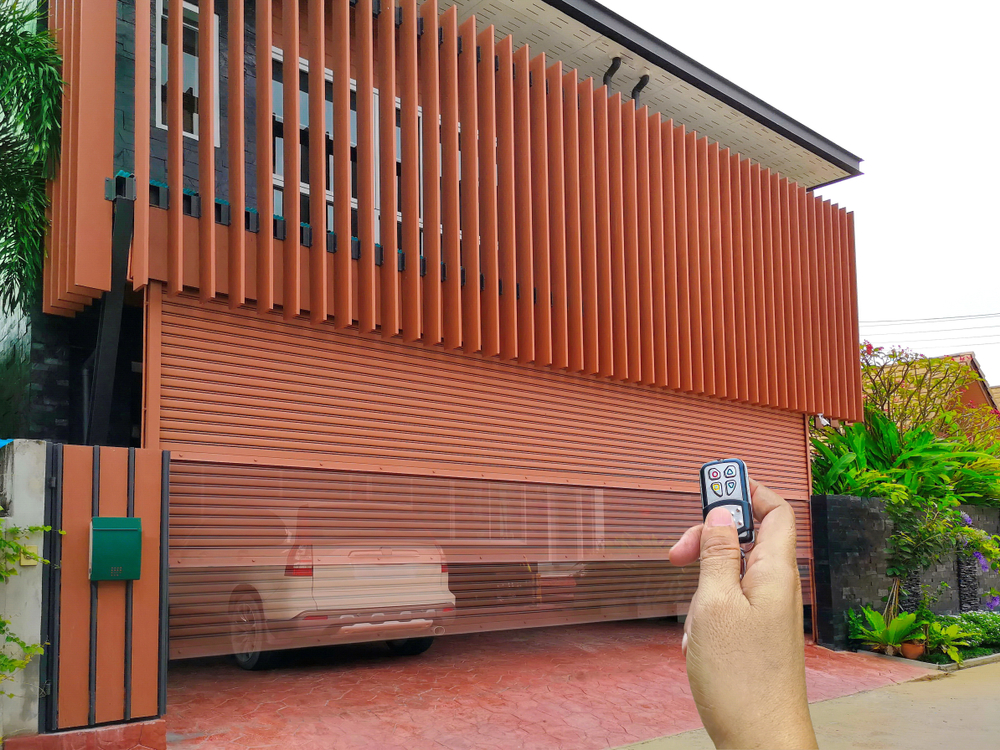
- Hit the remote. If the door opens smoother than a jazz saxophonist, congrats! If not, double-check connections or call us for garage door opener repair.
Fun Fact: A noisy garage door often signals deeper issues—like worn rollers or a garage door spring replacement. If yours sounds like a dinosaur in a blender, let’s chat.
Battery Types Compared (Because Choices Are Hard)
| Battery Type | Pros | Cons | Lifespan |
|---|---|---|---|
| Alkaline | Cheap, widely available | Dies quickly in high-drain devices | 1–2 years |
| Lithium | Longer life, works in extremes | Pricier | 3–5 years |
| Rechargeable | Eco-friendly, cost-effective | Requires upkeep | 2–3 years |
| NiMH | Good for frequent use | Self-discharges if unused | 1–2 years |
IMO: Lithium’s worth the splurge if you’re tired of annual swaps.
Wait—Why Bother With Maintenance?
Let’s not kid ourselves: ignoring your garage door is like ignoring a “check engine” light. Small issues snowball into garage door jerks, snapped cables, or worse—a broken spring that could turn your car into a modern art installation.
Routine Checks to Avoid Disaster:
- Lubricate tracks and rollers yearly.
- Test the auto-reverse feature (safety first!).
- Listen for odd noises—grinding = bad.
Need Help? Long Beach Garage Doors offers garage door maintenance plans that’ll make your door purr like a kitten.
“But What If I Mess This Up?” (Common Q&A)
Q: How often should I replace the battery?
A: Every 1–3 years, depending on usage. Mark your calendar—or set a reminder on your phone if you’re forgetful.
Q: My garage door still won’t open. Now what?
A: Could be a garage door cable repair, faulty motor, or alignment issue. Time to call in the cavalry (that’s us).
Q: Is DIY worth the hassle?
A: For batteries and basic fixes? Sure. For commercial garage door repair or automatic garage door opener installation? Leave it to the pros.
Q: What’s the average cost for professional help?
A: Prices vary, but Long Beach Garage Doors offers transparent quotes. No hidden fees—we promise.
When to Throw in the Towel and Call Long Beach Garage Doors
Look, we get it—DIY is satisfying… until it isn’t. If your garage door:
- Makes noises that scare the neighbors.
- Moves like it’s doing the cha-cha.
- Has a garage door coil spring that’s snapped (aka the “oh crap” moment).
…just call us. We handle garage door service, installation, and repairs for folks all over Long Beach. Why risk a trip to the ER when we can fix it in 30 minutes?
Final Thoughts: Keep Calm and Replace On
Changing a garage door opener battery isn’t rocket science, but it’s easy to overthink. Follow these steps, stay safe, and remember: Long Beach Garage Doors is here for the messy stuff. Whether you need garage door track repair or a whole new automatic garage door installation, we’ve got your back.
Now go enjoy that smoothly opening garage door—you’ve earned it. 🙂
